
Understanding High Volatility Slots
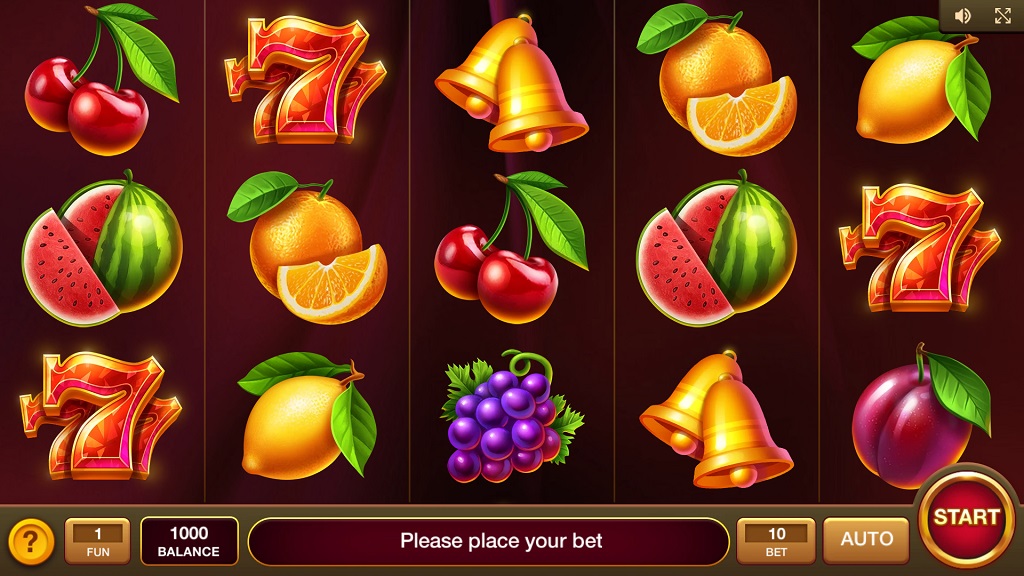
High volatility slots position larger rewards behind longer dry spells, so players who select them must accept stretches of modest or zero returns in exchange for the possibility of outsized wins. Comprehending how volatility interacts with reel layouts, bonus triggers, and payout tables allows a user decide whether a given title matches their bankroll and session length. House of Fun review is a single slot game that shows these dynamics clearly, with its distinct reel structure, feature set, and maximum win potential. The sections below review the mechanics that generate volatility, the mathematics behind return-to-player percentages, and the practical steps necessary to manage risk while pursuing the game’s upper payout limits.
Reel Layout, Winning Lines, and the Way to Greater Winnings
House of Fun employs a five-reel , three-row layout with thirty fixed paylines that assess left to right. Each reel holds a blend of low-value card ranks and 5 premium symbols tied to the game’s central theme. Because the paylines are fixed, every spin evaluates all 30 combinations simultaneously, yet only the highest return on any single line is paid. The clustering of value on the top two premium symbols adds to the elevated volatility: the chance of landing 5-of-a-kind on either symbol is deliberately low, so the game allocates its largest line payouts for those rare alignments.
Players can impact hit frequency modestly by changing the stake level, but the reel strips themselves remain constant across bet sizes. Consequently the option to raise or lower the wager modifies only the absolute monetary outcome, not the underlying reel probabilities. Understanding this separation aids users avoid the common error of believing that larger bets somehow improve the chance of triggering features; the reels are blind to stake size. Instead, the practical choice rests in fitting the chosen denomination to the session budget so that the 30-line structure can be employed for its full duration without exhausting funds during a prolonged base-game drought.
Systematic Execution of a Play Session and Post-Spin
Start by starting the game and confirming that the information panel indicates the 96.1 percent RTP and the 5,000× maximum win figure. Select a stake that amounts to no more than 0.5 percent of the allocated session fund, then spin manually for the first twenty rounds while noting the occurrence of any two-scatter teases. After the initial sample, move to an auto-spin count equal to the expected interval between features—approximately one hundred and sixty spins—while enabling the loss-limit stop that pauses play if credits fall below forty percent of the starting balance. This mechanical sequence imposes discipline without needing constant manual oversight.

At the conclusion of the auto-spin block, log the ending balance, the number of features triggered, and the highest multiplier observed. Contrast these figures against the session plan: if the feature count is materially below expectation, decrease the stake by one denomination step for the next block; if the count exceeds expectation, maintain or slightly boost the stake only if the remaining bankroll still fulfills the 0.5 percent rule. Repeating this review cycle after every completed block keeps the player inside the volatility envelope that House of Fun was designed to produce, turning abstract RTP and variance data into a repeatable, measurable routine.
How Fluctuation Influences Play Duration and Budget Management
Volatility dictates how often a slot awards wins and how big those wins usually are relative to the stake. In a high-volatility title the random number generator is tuned toward rare but substantial payouts, which means a player can expect prolonged sequences of non-paying spins before a bonus round or a line hit of notable size takes place. House of Fun matches this pattern: its base-game hit frequency stands below the industry average, yet the paytable features multipliers that can exceed one hundred times the triggering bet when several high-value symbols match during a feature. Because the distribution curve is asymmetric, a session budget must cover at least several hundred spins to give the variance room to express itself; otherwise a player jeopardizes exiting before the statistical upside emerges.
Effective bankroll planning consequently commences with an assessment of average spin cost times the number of spins required to reach the expected bonus frequency. If House of Fun initiates its primary free-spin feature once every one hundred and sixty spins on average, a prudent stake ought to be no more than one-half of one percent of the total session fund per spin. This ratio holds the player inside the game long enough for the high-volatility math to unfold while limiting the absolute loss if the feature neglects to emerge within the planned number of rounds. Tracking the running total after every fifty spins offers an early signal to adjust stakes downward if the realized hit rate deviates sharply from the theoretical interval.
Scatter Icons, Free-Spin Triggers, and Multiplier Mechanics
Scatter Placement and Qualifying Conditions
Three plus scatter symbols appearing anywhere on the reels activate the free-spin feature in House of Fun. The scatters don’t have to appear on a payline, which increases the effective trigger rate versus line-dependent symbols. Upon activation, the feature grants ten free spins in which a randomly selected premium symbol expands to cover entire reels when it lands, boosting the probability of five-of-a-kind combinations. The expansion effect serves as the main driver of the game’s high-volatility profile, since a single expanded reel may multiply the round’s payout several times over the stake that activated the feature.
Multiplier Growth In Free Spins
Whenever an expanded symbol participates in a winning line, a progressive multiplier starts at ×2 and goes up by one after every subsequent expansion within the same free-spin package. The multiplier returns to base only when the feature concludes, meaning a run of expanded symbols may generate multipliers reaching ×10 or higher before the spins finish. Since the increment is deterministic after the expansions land, the size of the final payout relies on how many times the selected symbol lands in succession. Players can track the running multiplier on the dedicated meter above the reels, providing them with immediate feedback on the round’s trajectory and whether an early exit option, if provided, might preserve value.
Special Substitutions, Layered Appearances, and The Effect on Variance
Wild symbols in House of Fun substitute for all regular pay symbols except scatters, and they appear in stacks of two or three on reels two, three, and four. The stacking increases the chance that a single wild will complete multiple paylines simultaneously, yet the overall frequency of wild appearances is tuned to maintain the target volatility. Because stacked wilds hold fixed positions on the reel strips, their presence or absence on any given spin is separate of the player’s stake; only the credit value of the resulting lines changes. This independence underscores the principle that volatility is a property of the reel design, not of the betting controls.
When a stacked wild appears during the free-spin feature, it combines with the expanding premium symbol to form additional five-of-a-kind lines that would otherwise be unattainable. The combination can drive a single round’s payout beyond the base-game maximum, demonstrating why the game’s upper limit is promoted as achievable only inside the bonus. Observing the distribution of wild stacks across a sample of one thousand spins provides empirical evidence of their contribution to variance: sessions that record above-average wild counts also record payout spikes that exceed the median by several multiples, validating the link between symbol stacking and the high-volatility curve.
Return-to-Player Percentages and What They Show About Uncertainty
Return-to-player (RTP) measures the proportion of wagered credits that a slot returns to players over a mathematically infinite number of spins. House of Fun lists an RTP of 96.1 percent on its information screen, a figure that already accounts for the contributions of its base game and all bonus features. Because volatility reallocates those returns rather than modifying the long-term average, the same RTP can accommodate both low- and high-volatility designs; the difference appears in the size and spacing of individual payouts. A player who checks the paytable can verify that the top two premium symbols bear awards large enough to counterbalance dozens of preceding non-paying spins, preserving the published RTP while still producing the dry spells associated with high variance.
Short-term realized RTP will differ from the theoretical value, sometimes dramatically, because the sample size of any single session is small compared with the cycle needed for convergence. Users therefore view the displayed percentage as a planning benchmark rather than a per-session expectation. When judging whether House https://www.reddit.com/r/Casino/comments/1ptriax/any_casinos_with_instant_or_quick_withdrawals/ of Fun matches their objectives, they contrast its 96.1 percent RTP against the volatility rating supplied by the game provider; the combination suggests that patience is required to achieve the mathematical return. Recording the cumulative return after a fixed number of spins permits a player to see whether the current sample is running above or below the long-term curve and to decide whether continued play remains within acceptable variance limits.
Bet Range, Peak Exposure, and Calculating Achievable Payout Caps
House of Fun receives bets from 0.30 to 60.00 credits per spin when all thirty lines are active, giving players a broad denomination ladder while preserving the same reel probabilities at every level. The maximum advertised win is 5,000 times the triggering stake, a ceiling achieved when five premium symbols align on a payline during a free-spin round that has accumulated the highest possible multiplier. Because the top award is fixed rather than progressive, the absolute monetary ceiling adjusts linearly with the chosen bet; a 60.00 credit spin can therefore yield a 300,000-credit payout, while a 0.30 credit spin tops out at 1,500 credits.
Calculating realistic win ceilings demands multiplying the per-line payout by the number of active lines and then by the active multiplier. Players who wish to estimate the likelihood of reaching the upper bound can refer to the paytable’s listed awards for five-of-a-kind combinations and cross-reference them against the average multiplier noted during free spins. Keeping a running log of feature outcomes over multiple sessions supplies the data required to judge whether the observed multiplier distribution aligns with the theoretical model, enabling informed decisions about stake adjustments before the session bankroll is materially depleted.
